Chancellery: +998792292202
Reception: +998792292236
Press service: +998792292403
Helpline: +998792244111
E-mail: office@navoiyazot.uz
EXAT e-mail: navoiyazot@exat.uz
Address: 210100, Republic of Uzbekistan, Navoyi region, Navoyi city, 5
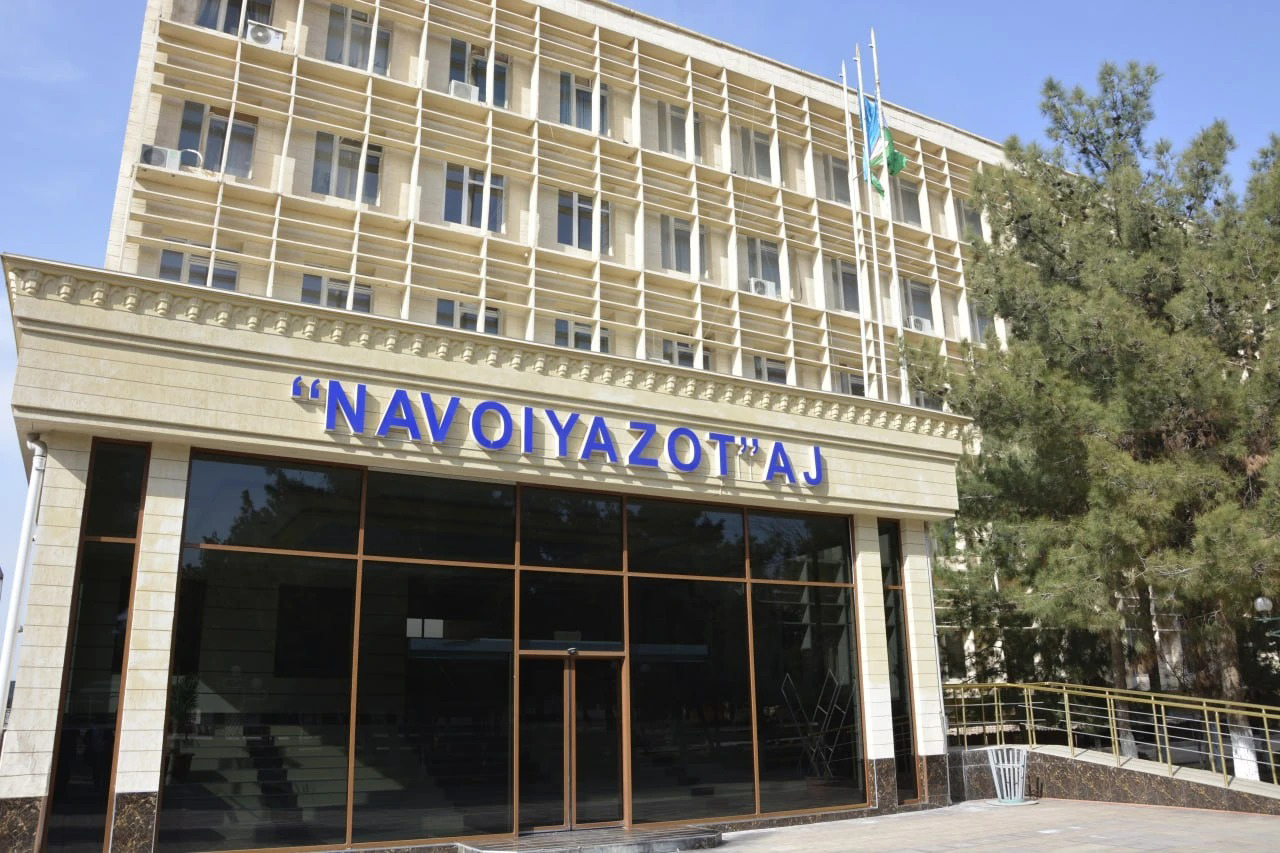
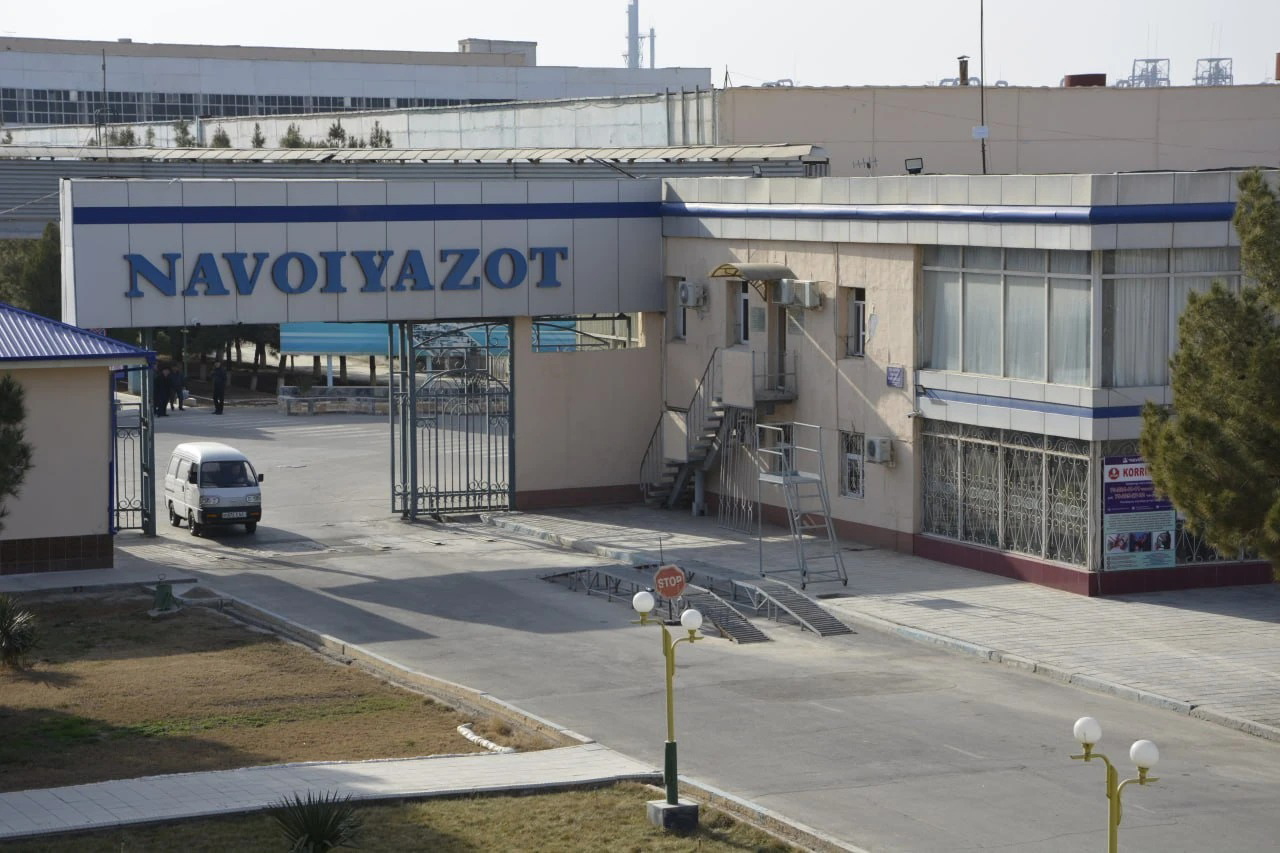
| The main types of products and services of the enterprise (organization) | Ammonium nitrate, ammonium sulphate, Nitron fiber, acetic acid, sodium cyanide, nitric acid, carbon dioxide, methanol, rectified, hydrochloric acid, polyacrylamide, argon gas, formalin, liquid chlorine, uniflok, CF resins, acetylene, methanol mark A, Phosphatic ammoniac saltpeter, dimethyl ether and other |
| The basic raw materials required for production | Natural gas, cationic dyes, catalysts, sorbital, sorbitan, gidroksinon, monoethanolamine, soda ash, salt technical, porofor, isopropyl alcohol, diisopropyl ether, itaconic acid, iron sulfate, sulfur, termolan, triamon etc. |
| The main local consumers | Agriculture, NMMC, enterprises of JSC Uzkimyosanoat, AGMK, JSC Navoi TES, GAO TAPOiCH, JV Amantaytau Goldfields, JSC TTZ, JSC YPK |
| The main importers of products | Kazakhstan, Kyrgyzstan, Tajikistan, Turkmenistan, China, Pakistan, Turkey, Ukraine |
Prerequisites for the Construction of the Navoi Chemical Plant
By the time construction of the Navoi Chemical Plant began, the chemical industry of Uzbekistan accounted for more than 7% of the total production of mineral fertilizers in the former USSR. In terms of fertilizer production per capita, the republic exceeded the national average.
Nevertheless, the volume of fertilizer production in the republic did not fully meet the needs of agriculture. Therefore, fertilizers had to be imported from other regions of the country — such as Western Siberia and Ukraine — as well as from abroad.
In 1965, Uzbekistan’s demand for mineral fertilizers amounted to 3,460 thousand tons, including 2,032 thousand tons of nitrogen fertilizers. However, only 2,146 thousand tons were produced, of which 1,338 thousand tons were nitrogen-based.
Broad prospects for a rapid increase in fertilizer production in Uzbekistan opened up after the commissioning of rich natural gas fields in the Bukhara region. The use of Bukhara natural gas as raw material made it possible to locate nitrogen fertilizer plants closer to the main agricultural regions where fertilizers were needed.
All these factors, as well as the construction of a large Navoi Thermal Power Plant (GRES), became the prerequisites for building a chemical complex in the city of Navoi — specializing in the production of ammonium nitrate and nitron fiber, along with a group of organic synthesis facilities based on integrated natural gas processing.
Design of the Navoi Chemical Plant
More than ten major design institutes of the former USSR participated in the design of the Navoi Chemical Plant. Additionally, project organizations from Czechoslovakia were involved in developing the design of the third-stage ammonia production.
The State Institute of Nitrogen Industry (GIAP) was appointed as the general designer of the complex, and since 1970, this role was continued by the Chirchik branch of GIAP.
The following key production projects were developed for the Navoi Chemical Plant:
• Ammonia production;
• Weak nitric acid (at 5.6 atm and 7.3 atm pressure);
• Ammonium nitrate;
• Organic synthesis facilities for acetylene production;
• Acetic acid;
• Acetaldehyde;
• Acrylonitrile (AN);
• Ammonium sulfate;
• Hydrogen cyanide;
• Sodium cyanide;
• Nitron fiber production.
Commissioning and Expansion of the Navoi Chemical Plant
On December 31, 1964, the State Acceptance Commission signed an act to commission the facilities for the production of weak nitric acid and ammonium nitrate, giving them an overall rating of “good.” This date marks the official beginning of the Navoi Chemical Plant. Two days earlier, on December 29, 1964, the first ammonium nitrate was produced under the shift led by Islamqul Dzhumaboyevich Saipov.
Three months later, on March 8, 1965, the first ammonia was produced under the shift of Vladimir Grigoryevich Usachev. Until that point, fertilizers had been produced using imported ammonia. In March 1965, the designed capacity of 110 thousand tons per year was achieved. On March 31, 1965, the plant’s first-stage ammonia production facilities were officially commissioned.
Other major milestones include:
• November 1965 – commissioning of the technical oxygen bottling unit, which supplied construction sites across the Bukhara region;
• Summer 1967 – production of the first ton of ammonia water, urgently needed by the Navoi industrial zone and agriculture;
• June 1968 – launch of the carbon dioxide production unit.
Construction of the organic synthesis workshops began in 1965, and by August 1968, facilities for producing carbon dioxide, sodium cyanide, hydrogen cyanide, acetic acid, acetylene, acetaldehyde, and ammonium sulfate were commissioned.
On April 21, 1973, the first tons of acrylonitrile (AN) were produced.
The newly founded enterprise grew and developed at an impressive rate for its time.
• December 31, 1970 – facilities for acetylene and acetaldehyde production commissioned;
• January 7–8, 1971 – production of gaseous ammonia and nitric acid began;
• January 9, 1971 – the granulation unit began operation, producing the first ammonium nitrate of the plant’s third stage;
• March 31, 1971 – commissioning of:
o the third-stage weak nitric acid workshop;
o the third-stage ammonium nitrate production facilities;
o the third-stage ammonia production facilities.
Construction of the first-stage nitron fiber plant was carried out between 1970 and 1971. On October 25, 1971, the first production thread was obtained (using imported AN). Full design capacity was reached by June 1973.
In 1975, the Navoi Chemical Plant was reorganized into the NavoiAzot Production Association.
Another milestone came in 1988, with the commissioning of a thiourea production unit and the establishment of hydrochloric acid production.
In 2001, a caustic soda and liquid chlorine production plant was commissioned, built jointly with the German chemical company Lurgi.
Between 1991 and 2014, 14 new types of products were mastered:
1. “Unifloc” reagent – 1991
2. Epoxy-diane resins (ED-20, ED-16, ED-40) – 1992
3. Urea-formaldehyde resins (KFZh, KS–11) – 1992
4. Water-soluble reagents (K-4, K-9) – 1993
5. Polyacrylamide gel – 1993
6. Granulated polyacrylamide – 1994
7. Methanol, grade “A” – 1999
8. Formalin (37%) – 2000
9. Caustic soda – 2001
10. Hydrochloric acid – 2001
11. Sodium hypochlorite – 2001
12. Polypropylene bags – 2005
13. Nitrogen-phosphorus fertilizer – 2009
14. Water-dispersion paint – 2010
Last updated at: May 25, 2026

© 2012-2026, Joint Stock Company "Uzkimyosanoat"
Website Terms and Conditions of Use